
Writing
English Intent
To foster a love of reading and writing, helping students build strong language skills. We aim to create a foundation for lifelong learning and academic success, while ensuring the curriculum is inclusive and engaging for all.
Writing Intent
At Barlby Primary School, we are committed to helping pupils to write clearly, imaginatively and coherently for a range of purposes and audiences, with secure spelling, punctuation and grammar (SPaG).
In line with the National Curriculum, we teach both:
•Transcription: spelling and handwriting
•Composition: articulating ideas, planning, drafting, evaluating and editing
High quality literature drives our writing curriculum. Using the CLPE’s Power of Reading texts and linked texts, pupils encounter diverse voices and genres that inspire authentic outcomes. Our phonics provision (Little Wandle) ensures early writers have the code knowledge to spell and write simple sentences from the outset.
Writing Implementation
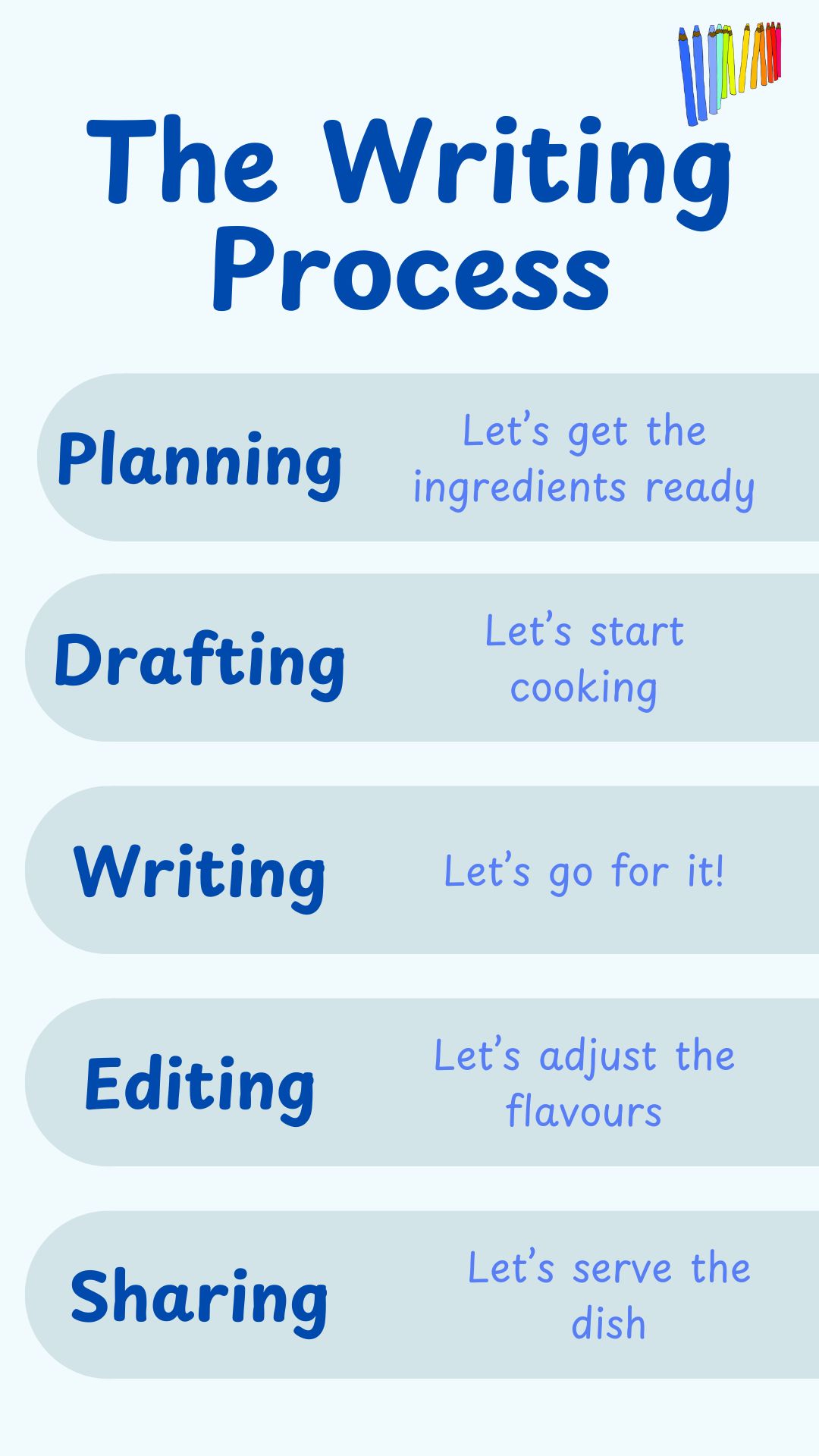
At Barlby Primary School, we provide a structured and engaging English curriculum designed to encourage pupils to experiment with a variety of writing forms, from narrative and descriptive writing to persuasive and informative texts. Our writing curriculum builds substantive knowledge (transcription, grammar and text conventions) and disciplinary knowledge (planning, drafting, revising, editing and sharing).
EYFS – Laying the Foundations
In EYFS, we lay the groundwork for writing by fostering early writing skills. We do this through:
•Daily phonics using Little Wandle
•Mark making, name writing and fine/gross motor development, progressing to letter formation, captions, labels and simple sentences
•Using “Say it, Hold it, Write it” and talk-rich provision to rehearse language before writing
•Modelling letter formation
To find out more about EYFS and early writing, please click here.
Key Stage 1 – Building Accuracy
In Year 1 and Year 2, pupils build on these foundational skills, developing the ability to write meaningful sentences with correct punctuation in line with our Barlby Primary School Writing Targets (found below).
•Pupils write meaningful sentences with accurate capital letters, full stops, question/exclamation marks, and begin to use commas in lists.
•Phonics knowledge supports segmenting and spelling; high frequency and common exception words are practised and applied.
•Children learn about simple text structures (e.g., story openings/endings, instructions with imperatives)
•Vocabulary is broadened through shared reading and modelled writing using high quality CLPE core texts.
Key Stage 2 – Craft, Cohesion and Control
Children in KS2 are exposed to a broader range of writing genres, including persuasive, narrative, descriptive, and informational writing. In these stages, pupils are taught to identify the skills and techniques authors use in texts and discuss the purpose of these choices. They explore the connection between audience, purpose and language choice in their writing, which helps them to eventually develop their own authorial voice.
•Pupils write across a wider range of genres, adapting formality, tone, and register for audience and purpose.
•Grammar is taught explicitly and cumulatively
•Spelling builds systematically through morphology and etymology (roots, prefixes/suffixes, word families; statutory word lists), with explicit strategies for independence.
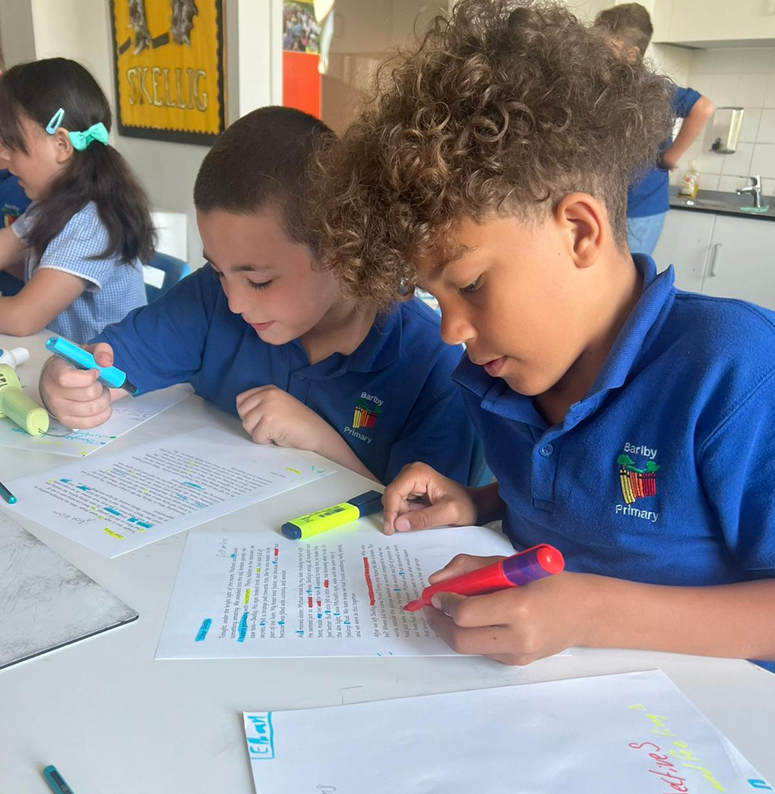
•Pupils understand and follow the writing process
•Pupils draw on mentor texts (CLPE) to analyse authorial choices and emulate effective techniques as they develop their own voice.
Oracy and Speaking and Listening
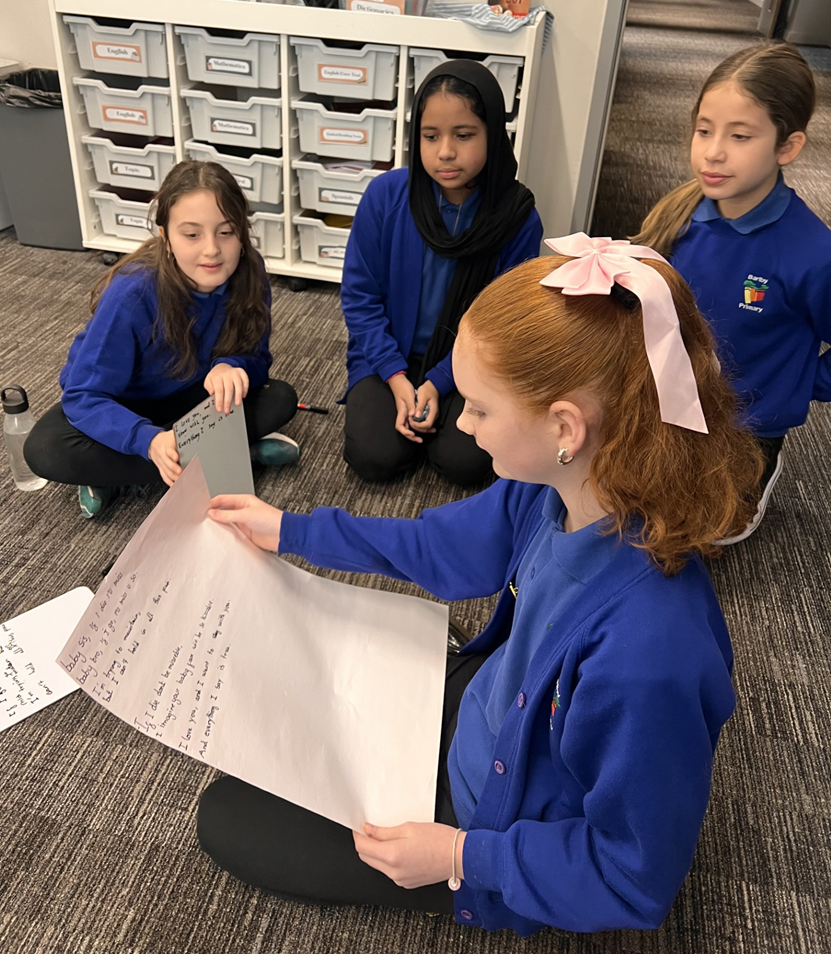
We recognise that oracy plays a key role in writing development. At Barlby Primary School, we prioritise speaking and listening across all year groups as these skills help build confidence and check understanding. We incorporate ‘Talk Partners’ and ‘Say it, Hold it, Write it’ strategies into every writing lesson to ensure that pupils have ample opportunities to orally explore what they would like to write. By using shared discussions and collaborative activities, pupils develop a deeper understanding of language patterns, grammar and punctuation. These discussions support pupils in refining their writing skills and help them gain confidence in selecting the appropriate writing techniques for different tasks.
Oracy at Barlby:
- Talk partners
- Thinking aloud
- Say it, hold it, whisper it, write it
- Conscious allies
Spelling, Punctuation and Grammar
•Grammar and Standard English are taught systematically and applied within meaningful writing
•We timetable explicit SPaG sessions to teach, revisit and assess key knowledge and skills
Handwriting
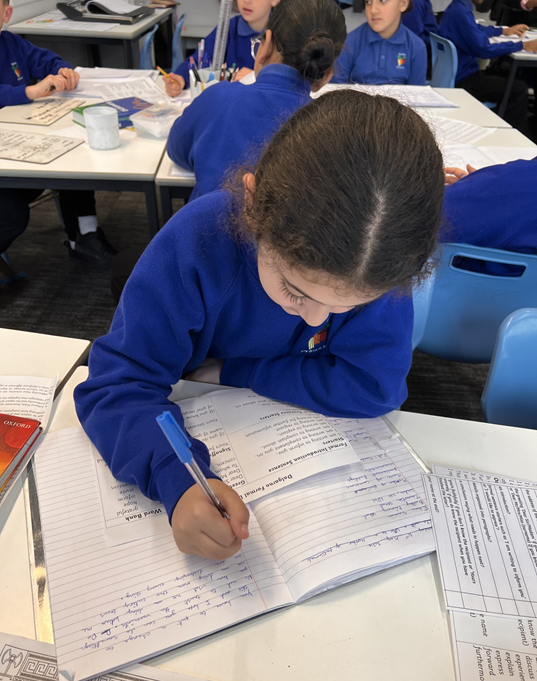
Handwriting and clear presentation are focused on throughout all lessons in our curriculum. For stand-alone handwriting sessions, we use the Little Wandle Handwriting scheme from EYFS to Year 2 and the Teach Handwriting scheme from Year 3 to Year 6.